
BJP MP Raghav Chadha addressed the 12th IPU Global Conference of Young Parliamentarians in Samarkand, Uzbekistan, highlighting India's digital transformation journey. He emphasised how technology is widening access and promoting inclusion, citing UPI's success, affordable data, and robust data protection laws. Chadha also discussed India's digital cooperation with Uzbekistan and the importance of digital rights, safety, and skill development for all citizens.

India's Ambassador to the US, Vinay Mohan Kwatra, has clarified that the recent amendments to the Foreign Contribution (Regulation) Act (FCRA) are primarily aimed at enhancing transparency and ensuring accountability in foreign financial flows.

The Insurance Regulatory and Development Authority of India's (Irdai) recent actions against insurers for breaching expense of management (EoM) limits indicate a serious commitment to enforcing operating and distribution cost controls, according to industry experts.

Ladakh Lieutenant Governor Vinai Kumar Saxena has approved new rules for the regularisation of 'nautor lands', granting proprietary rights to eligible landholders. This move aims to resolve a long-pending issue, provide legal certainty, and allow land to be used as a financial asset for thousands of residents in the Union Territory.

India's capital markets regulator, Sebi, has simplified the onboarding process for foreign portfolio investors (FPIs) by permitting them to submit a digitally signed Power of Attorney (PoA) to their custodians, eliminating the need for notarisation or apostillisation.

The National Payments Corporation of India (NPCI) stated that the Merchant Discount Rate (MDR) "is distributed only amongst the UPI ecosystem, to further invest into infrastructure resilience, innovation, cybersecurity (protecting the UPI infrastructure with banks and non-banks) and customer service."

The government is introducing a 0.4% Merchant Discount Rate (MDR) on UPI person-to-merchant payments above Rs 2,000, effective October 15. This move ends the zero-MDR regime, aiming to fund UPI infrastructure and sustainability, as the previous government subsidy was insufficient to cover operational costs. Payments between individuals and most everyday merchant transactions will remain free.

The Nifty 50 experienced significant volatility during its closing auction session, leading to losses for both long and short retail options traders due to thin liquidity and rapid price swings, particularly in private-sector banks.

YR Sadashiva Reddy, Co-Chairman of the Bar Council of India (BCI), has called for the immediate resignation of BCI Chairman Manan Kumar Mishra, citing alleged irregularities in appointments, diversion of Council funds, financial dealings with law colleges, and other governance issues. Mishra has dismissed the allegations as 'baseless'.

'Once you're wrestling with making a merger of that scale value-accretive, you're also under pressure to keep growing the balance sheet and chasing liabilities, and other things start to slip as a consequence.'

A significant boardroom battle has erupted at Tata Sons, India's largest conglomerate, following the board's decision to proceed with a public listing and extend N Chandrasekaran's tenure as executive chairman, moves opposed by Noel Tata, who represents the majority shareholder Tata Trusts.

Shapoorji Pallonji Mistry's statement will be watched closely against the backdrop of the listing battle as well as the Tata leadership contest, with veto votes being cast over the reappointment of N Chandrasekaran as chairman of Tata Sons for a third term.

Sashidhar Jagdishan, the managing director and CEO of HDFC Bank, has announced his decision not to seek reappointment and will retire at the end of his current term on October 26, concluding a six-year tenure marked by significant regulatory and governance challenges, including RBI restrictions, a major merger, and scrutiny over alleged illegal payments.

The National Stock Exchange of India Ltd (NSE) has received regulatory approval from SEBI for its long-awaited Rs 30,000-crore initial public offering (IPO), positioning it to potentially become the country's largest-ever public issue.
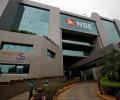
The National Stock Exchange (NSE) has set its initial public offering (IPO) price band at Rs 1,700-1,785 per equity share, with the subscription period running from September 17 to September 21, aiming to raise up to Rs 22,569 crore.
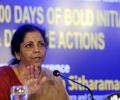
The Rajya Sabha has passed The Bankers' Books Evidence Bill, 2026, which aims to replace a British-era law and allow digital and virtual records to be admissible as evidence in courts. This legislation aligns with contemporary digital banking practices and extends a uniform evidential framework to various financial entities, including NBFCs and fintech companies. Finance Minister Nirmala Sitharaman highlighted the bill's role in strengthening public confidence and safeguarding customer privacy. The bill's passage, however, saw an Opposition walkout over unrelated issues.

Jio Platforms Ltd, the digital services arm of Reliance Industries, has secured Sebi's final observation to launch an initial public offering (IPO) aiming to raise approximately USD 4 billion (Rs 37,700 crore), potentially making it the largest IPO in India's history.

The search for N Chandrasekaran's successor as Tata Sons Chairman has reportedly narrowed to Tata Steel CEO T V Narendran, Tata Sons Executive Director Saurabh Agrawal, and NSE MD & CEO Ashish Chauhan, with Chauhan emerging as a potential 'dark horse' candidate.

The All India Football Federation (AIFF) is in a difficult situation regarding India's participation in the inaugural FIFA ASEAN Cup and a proposed friendly against Brazil, as both events clash on October 3. FIFA regulations prohibit fielding an understrength team in a sanctioned competition, forcing the AIFF to seek clarification from FIFA on its plan for separate squads.

Tamil Nadu Governor RV Arlekar announced that the TVK regime, led by Chief Minister C Joseph Vijay, will take steps to ensure fair financial devolution from the Centre, including pursuing the matter in the Supreme Court. The government also plans to conduct a 'Social Justice Survey' and address the state's severe financial deterioration.

Indian crypto exchanges and companies have expressed strong support for the Central Board of Direct Taxes' (CBDT) new Crypto Asset Reporting Framework (CARF), which mandates reporting and due-diligence obligations for crypto service providers on all transactions starting 2026.

Income Tax officials seized Rs 9 crore in cash from a car near Bengaluru's Electronic City, leading to further recovery of Rs 1.3 crore in Tamil Nadu, bringing the total to Rs 10.3 crore. The interception followed police information about illegal cash transportation, and an investigation is underway to determine the source and purpose of the funds.
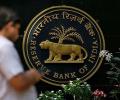
Reserve Bank of India Deputy Governor Rohit Jain has stated that India cannot rely solely on bank balance sheets to fund the extensive investment required for its 'Viksit Bharat' (developed India) goal by 2047, emphasising the critical need for deeper corporate bond, foreign exchange, and derivatives markets.

Tata Sons approached the RBI in 2024 seeking de-registration after becoming debt-free, a move that would allow it to remain a privately held, unlisted company. The application has remained pending.

AI firm Pramaana Labs, with a significant Indian workforce, has successfully raised $27 million in seed funding led by Khosla Ventures. The company aims to use these funds to advance its unique technology that converts complex knowledge into machine-verifiable truth, addressing the accountability gap in AI across regulated sectors like tax, healthcare, and financial compliance.

Tata Sons, the holding company of the Tata group, continues to be classified as an 'upper-layer non-banking financial company' (NBFC) by the Reserve Bank of India (RBI), despite its application to deregister as an NBFC-Core Investment Company (CIC) remaining under consideration. This classification subjects it to enhanced regulation and a mandatory listing requirement, which remains uncertain.

'The sales pressure on the ground, a board and CEO not fully aligned, and a senior team that isn't pulling together -- that's when these things surface.'

The Securities and Exchange Board of India (Sebi) has introduced a comprehensive new code of conduct for its board members, significantly tightening rules on conflict of interest, disclosures, recusals, and non-permitted investments, moving from broad ethical guidelines to a more prescriptive, compliance-driven regime.
SEBI Chairman Tuhin Kanta Pandey stated that cybersecurity is now a board-level concern, not just an IT challenge, emphasising the need for caution when deploying artificial intelligence in critical infrastructure. He highlighted that AI for cybersecurity must be secure, governed, and accountable, and also addressed the emerging risks from quantum computing, urging collective resilience and sharing of best practices among regulators.

A data breach does not end when the headlines fade. For victims, stolen personal information can fuel fraud, identity theft and financial losses for years.
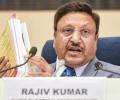
It is because dealing with a regulatory system that is largely headed by retired IAS officers then becomes relatively easy, points out A K Bhattacharya.

The US State Department has paused visa appointments worldwide to conduct a 'global training initiative' for consular officers, aiming to ensure applicants are not likely to become a 'public charge' and are comprehensively evaluated, intensifying President Donald Trump's immigration crackdown.

The question for the next 20 years is not whether India can become a $5 trillion or $10 trillion economy. Those are attractive targets, but the real question is whether India can create enough productive jobs, educate its children properly, make its cities liveable, and give hundreds of millions of people a substantially better life, asserts Ramesh Menon.

The Telecom Regulatory Authority of India (Trai) has expanded the 1600-number series to include utilities, courier, and logistics companies, introducing the new 1601 series to help consumers identify legitimate calls and prevent widespread fraud and impersonation.

The Enforcement Directorate (ED) reports a decline in traditional financial crimes due to sustained investigative actions and government initiatives, while highlighting emerging challenges like cryptocurrency fraud and terror financing.
Vedanta Ltd's aluminium plant in Jharsuguda, Odisha, is under regulatory scrutiny by the state's Water Resources department regarding its water sources and drawal history. This follows a complaint alleging unauthorised groundwater extraction and previous financial demands for illegal water use, with the National Green Tribunal also seeking responses on environmental concerns.
The Delhi government is set to introduce a comprehensive drone policy aimed at creating over 1,000 jobs and regulating drone operations. The policy will focus on establishing research clusters, flight testing facilities, and providing subsidies, while also addressing drone usage for government purposes like traffic management and surveillance, considering the city's extensive 'no drone zones'.

The Securities and Exchange Board of India (Sebi) has prohibited Zee Entertainment Enterprises Ltd (ZEEL) from the securities market for two months and its Chairman Emeritus Subhash Chandra and MD & CEO Punit Goenka for one year, imposing a total penalty of Rs 1.48 crore, for the unauthorised pledge of ZEEL's Hyderabad land to secure loans for promoter-linked Essel Group entities.

Examine the complete title chain to establish how the present owner acquired the property.

'A balance had to be struck between the economic cost of taking action at this point against the need not to fall behind the curve in controlling inflation and anchoring inflation expectations.'
